Finding a New Home
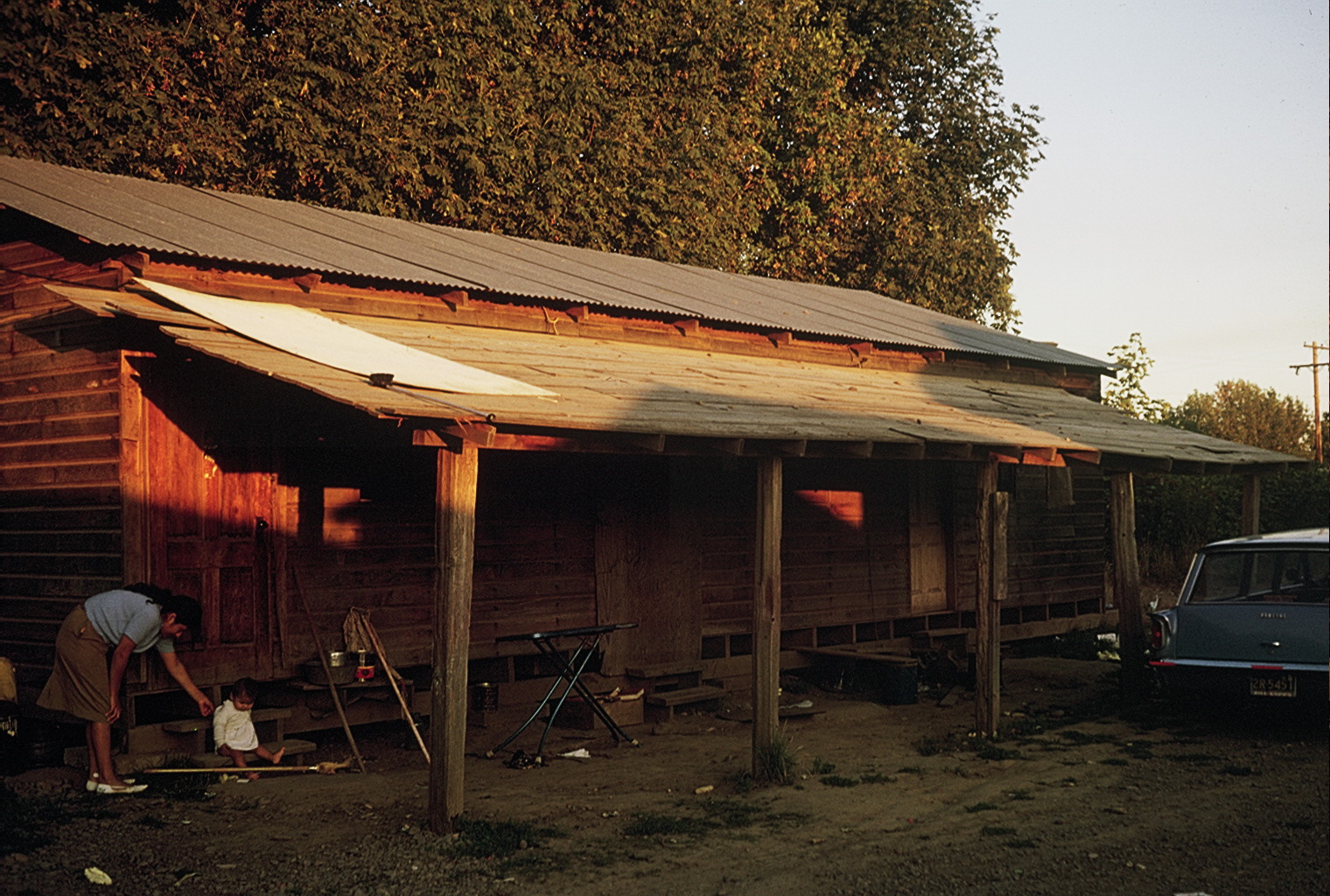
I knew that something unusual was happening as soon as I arrived at Harvest Valley Farm.
It was a warm September evening. I was alone. June and Helen couldn’t come, and the college volunteers had gone back to school.
In the labor camp I expected the women to be hurrying, as they rolled out flour tortillas, so they could go to English class on time. The men, still wearing their stained work clothes, usually sat in the doorways to escape the heat from the wood burning stoves.
Tonight the women were dressed in their best clothes and the men had changed into clean shirts and pressed pants.
“We came early from the fields,” Rosalia greeted me.
“Padre is here. He has brought Mass to us right here in the camp.”
I had seen the Mexican priest from time to time this year and the year before. We arranged our schedules so we wouldn’t conflict with each other.
Now, this evening, I had arrived to teach English and I couldn’t understand why Padre was taking my time. Hadn’t we agreed to respect each others’ schedule?
He hurried to where I stood by my car.
“I’m sorry,” he said seriously. “I had no way to let you know that Mass would be here tonight. It’s the only time I could find with so many Masses to arrange in other camps. You see, I’m leaving on Friday for Mexico.”
His sincere apology touched me. “I will cancel the English class for tonight.”
He looked relieved. “And you will attend Mass?”
“Yes.”
Men were carrying wooden benches from the rooms while women spread newspapers on the ground for kneeling. Domingo and Juan brought a small table. Padre covered it with a white cloth and set out the bread for the Mass.
I sat with the women on the benches and the men stood behind us. Mild, September air drifted over us and in a willow tree a thrush sang its evening song.
The Mass began.
While I sat on the hard bench close to Rosalia and little Carmelita, I became aware of how much I appreciated my migrant friends.
Behind me I heard Domingo clear his throat, and I pictured him as he was . . . a few more grey hairs this year than last.
Elias stood near Belén. He held the baby, now over a year old. I saw Belén turn to look at this child that she loved so dearly.
Juan stood to one side, his arms folded, a gentle expression on his face as he glanced at Antonia and the baby in her arms, his son, born two weeks earlier in the United States.
As we knelt on the newspapers, I could smell the earth, dusty after the long, dry summer. My arm touched Rosalia. I heard her whisper a prayer, “Thank you, Lord, for all your blessings.”
What more was she thinking? Perhaps, some of the hopes she had told me last week.
“If God wills, some day I can live in a house where eight of us won’t need to sleep in one room. I can settle down so my children can go to school. They will read and write. God will provide a better life for my children.”
The Mass was finished. Padre folded the white cloth.
Rosalia turned to me. “We will stay in Oregon this winter.”
“You mean you aren’t going back to Texas?”
“That’s right. We have planned for many years, but now we are braver because we can speak a little English. And the children are old enough to work harder, so we have saved some money. The grower says we can live in the camp all winter.”
I felt less brave than Rosalia. She had never experienced winter in a northern state. She didn’t know how cold the rain could be in the Willamette Valley. How would the family keep warm in the migrant camp housing . . . only single construction . . . a few boards between them and the winter weather?
Rosalia was telling me more. “Six families will stay. We want to live in one place so our children can go to the same school all year.”
“Yes, of course.” I, too, wanted the children to have this opportunity. But another concern came to mind. How would Domingo and Rosalia adjust without the extended family . . . the many brothers, sisters, aunts, uncles, and cousins in Texas?
Rosalia smiled at me as if to read my mind. “Don’t worry, Luisa. We’ll be all right. At Christmas we’ll have a pinata and music and, of course, tamales always on Christmas Eve. But come now, because it’s Padre’s last night here, we have tacos and chicken.”
“And music,” said Juan, “a trio. Renaldo, Elias, and I will serenade while you eat.” He went to his room to tune the guitar.
Already Belén and Antonia were setting a table outside the rooms. Domingo strung an extension cord so we had light. Renaldo’s mother brought a pile of corn tortillas, Rosalia carried out a fruit salad, and Elias’ mother came with tamales. Renaldo helped Grandma Gomèz find a place at the table.
As we ate, Padre and I laughed together as we remembered our first meeting at the escuelita, how the children ran out and hid until he called them back to hear the story of the Good Shepherd.
Juan, Renaldo, and Elias sang in sweet, close harmony the Mexican songs that called to my heart. I realized I would never be the same again. Part of me belonged in the migrant camp.
I was no longer a stranger.
* * *
Copyright 2012, Rolf Erickson