Labor Pains
“Let’s come back once a week,” said Helen as we packed to leave for home.
“These two weeks have gone too quickly. We’re just getting started.”
By Thursday of the next week we were back at Harvest Valley Farm. New volunteers came with us. They were college students home for the summer.
Helen’s daughter Deanna and her friend Judy could help with Bible school and play games with the children. Kent and Grieg wanted to organize baseball games with teenagers.
We parked our cars by the road and walked slowly into the camp. Would our migrant friends accept so many new persons or would they feel that we were invading their privacy?
“We brought some others with us,” I said to Domingo, “if it won’t be a bother to you.”
“No bother. They are welcome.”
Barefooted children gathered around Judy and Deanna. Kent and Grieg held up a baseball, and soon a game was in progress.
We taught our English classes, and the sun had set over the fields when Judy came to me.
“A woman keeps asking me what time it is.”
A tingle raced along my spine. “How often?”
“Every twenty minutes.”
“Is she pregnant?”
“Yes, very.”
“Show me where she lives.”
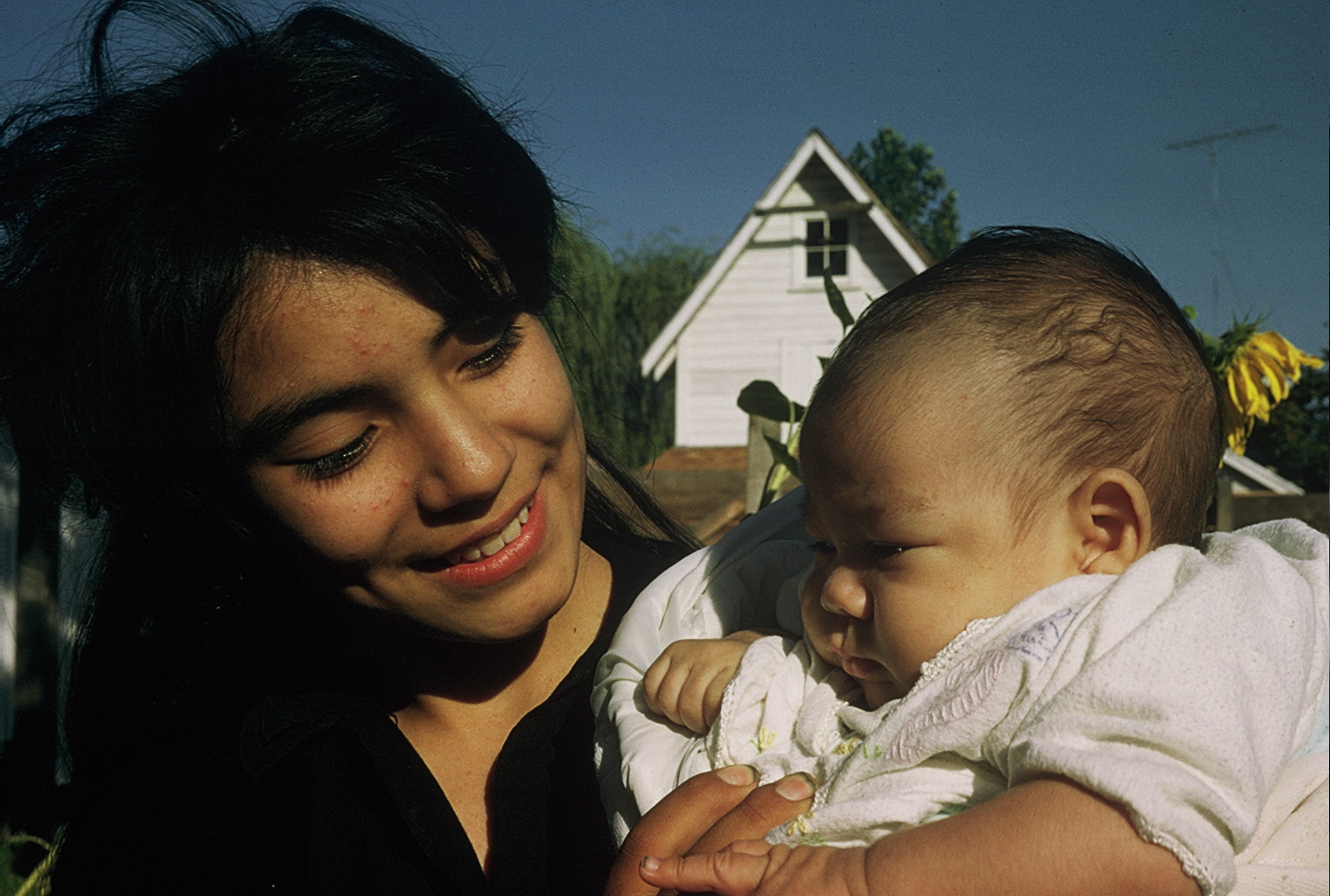
The young woman sat on the bed, staring vacantly at the boards of the wall.
“Are you having labor pains?” I asked.
“Yes.”
“Can your husband take you to the hospital?”
“We don’t know where the hospital is. We just arrived last night. The car barely made it here. Something is wrong with it and my husband says I can’t have the baby until the car is fixed.”
She looked at me and I saw panic in her eyes as she said, “My last baby was born Caesarean.”
“Judy,” I said. “Go tell Grieg that I need him to go with me to the nearest hospital, probably in Salem.”
“I’ll take you to a hospital,” I said to the woman. “Where is your husband so we can tell him you are going?”
“No! I mustn’t tell him. He doesn’t understand. He thinks I can have the baby here in our room. Right now he’s playing dice because he hopes to win enough to have the car fixed.”
Grieg came to the door. “You wanted me?”
“Yes.” My heart was racing so that I had a hard time speaking. “Here are the keys to my car. But hide it around the end of the building. I don’t want this woman’s husband to see her leave with us. He might not let her go.”
Her name was Alicia, and her hands were hot as I helped her into the front seat of my car. Grieg sat in the back. I eased the car over the bumpy road and out to the highway.
“Time the pains,” I said to Grieg.
He took off his watch and held it in his hand.
The night was growing darker as we swerved along the country roads.
“The pains are seven minutes apart,” said Grieg.
We entered the city and stopped at a corner to ask directions to the hospital.
I pulled up at the emergency entrance and jumped out of the car, shouting to an attendant in the emergency room, “We have a woman who needs a Caesarean.”
Calmly the attendant started to fill out a paper. Grieg helped Alicia walk into the room.
“You are the father of the child?”
“No! I’ve never seen her before.”
The attendant turned to me. “She works on your farm?”
“No, we just found her in a migrant camp.”
“You say she is in labor?”
“Her pains are now five minutes apart.” Grieg gulped out the words.
“And her other baby was Caesarean.” I found myself shouting again.
“Did you say Caesarean?” She dropped the paper and picked up a phone.
I followed along as an orderly wheeled Alicia to the obstetric department. In a few minutes Alicia was in a hospital bed and a nurse was measuring her stomach. The doctor arrived. As Alicia was taken to the operating room she said to me, “Please stop at the camp and tell my husband where I am.”
Before midnight her seven and half pound baby boy was sleeping in the nursery.
As Grieg and I drove toward the migrant camp, I said, “I guess we have to stop, but I’m worried about Alicia’s husband.”
“Yeah,” said Grieg. “What if he’s real mad at us?” I looked at Grieg and was glad he was tall and strong.
“I hope he’s not a big man and that he wasn’t drinking while he played dice.”
The camp was completely dark except for a light in Alicia’s room.
A slender young man answered our knock.
I cleared my throat. “Congratulations! You are the father of a fine son.”
A tear slid down one of his cheeks.
“He’s just a boy,” I thought. “He could hardly be twenty years old.”
“I didn’t know what to do,” he said. “I had no money. I didn’t know how to take her to the hospital. I didn’t even know where to find a hospital. We have no relatives or friends here.”
“You have friends now.”
“Thank you. God will repay you for your kindness.”
* * *
Copyright 2012, Rolf Erickson