The Labor Contractor
A blue pickup truck was parked in the migrant camp at Harvest Valley Farm.
The labor contractor! I didn’t need to see him and, more important, I didn’t want him to see me.
I started to turn my car around, thinking to come back later when the contractor was gone. I remembered the year before when he had threatened some of the families that I visited.
One family had needed bedding and clothes. Their car broke down in the San Joaquin Valley of California. With no money to have it fixed, they came the rest of the way to Oregon with the man’s brother, sixteen people in one station wagon. There was no room for quilts and extra clothing.
The mother whispered to me, “Please could you find some quilts and a few clothes for us. We didn’t know it would be so cold up here, but please bring them after dark when the contratista cannot see you. He says that if anyone accepts anything from you, he will cut off their work. If he gives us no work, we will have nothing to eat.”
The next week this family and all their relatives were gone. The contractor had found out about the quilts and clothing even though I brought them after dark.
No, I didn’t want the contractor to see me in the camp. I hoped to avoid him as much as possible this year. Earlier in the spring I had visited the grower and he had given me permission to teach English and Bible school.
Just last week Rosalia had called me long distance to tell me that they had arrived from the south in time for the cherry harvest, so now I had driven down to Harvest Valley to see them and to tell them that English classes would be during bean season this year.
I started to turn my car, but I was too late. The contractor came around the corner of a building and walked toward me. He was a handsome man with wavy, black hair and dark skin.
“Luisa, how nice to see you,” he said as he smiled at me. “Have you come again to teach in the camp?” His English was quite good.
I felt my neck muscles tense. Since he was being so friendly, I felt I should be even more on guard than usual.
“Most of the workers are in the bodega, the sorting shed,” he continued. “They are working late this afternoon. The cherry crop is good, the weather is fine. You want to invite them to your English class, no? You should go there and tell them about your class.”
“The bodega? I don’t think I should go there and interrupt their work.”
“But they are your old friends from last year. They want to see you.”
“I can’t go there. I don’t even know where it is. I’ll just wait for them here.”
Again his smile was a flash of even, white teeth in his dark face. “I’m going to the bodega myself. Just follow my truck and I’ll show you the way.”
I was afraid of antagonizing him if I refused his apparent show of friendliness. I followed his pickup down a dirt road. Maybe he had changed his mind about me and wouldn’t cause so much trouble this year. At any rate, I felt that had to cooperate with him.
We parked in front of the sorting shed and he waved his hand toward a large door, which was standing open.
As I walked toward the shed, I could see men loading boxes onto a truck. A noisy clatter of machinery filled the barn-sized room. Sounds bounced off the high ceiling.
I saw Domingo, Rosalia, and Elias working at the center of the room. Rosalia’s brother Juan was at a conveyer belt near the door.
“Juan,” I shouted into his ear. “Do you want to come to English classes this summer?”
“I’ll be there.” I could hardly hear his low voice. He didn’t look up from the conveyer belt where he was picking out twigs and bad cherries.
Once again I thought, “I shouldn’t be interrupting the work, but the contractor insisted that I come.” I caught a glimpse of his blue pickup truck as it passed the open door and headed back toward the migrant camp.
At almost the same instant I saw the grower, a tall, blond man, standing near a pile of boxes that were ready to be loaded onto a truck. He stared at me with a puzzled expression on his face, and then he started walking toward me.
I knew that workers were on a farm to harvest the crops, not to learn English. If I interfered with work, the grower had the right to order me off his property. I was clearly in the wrong.
I waved to the grower and gave a smile that I hoped would look happy and friendly. Then I went out the door and tried not to run to my car.
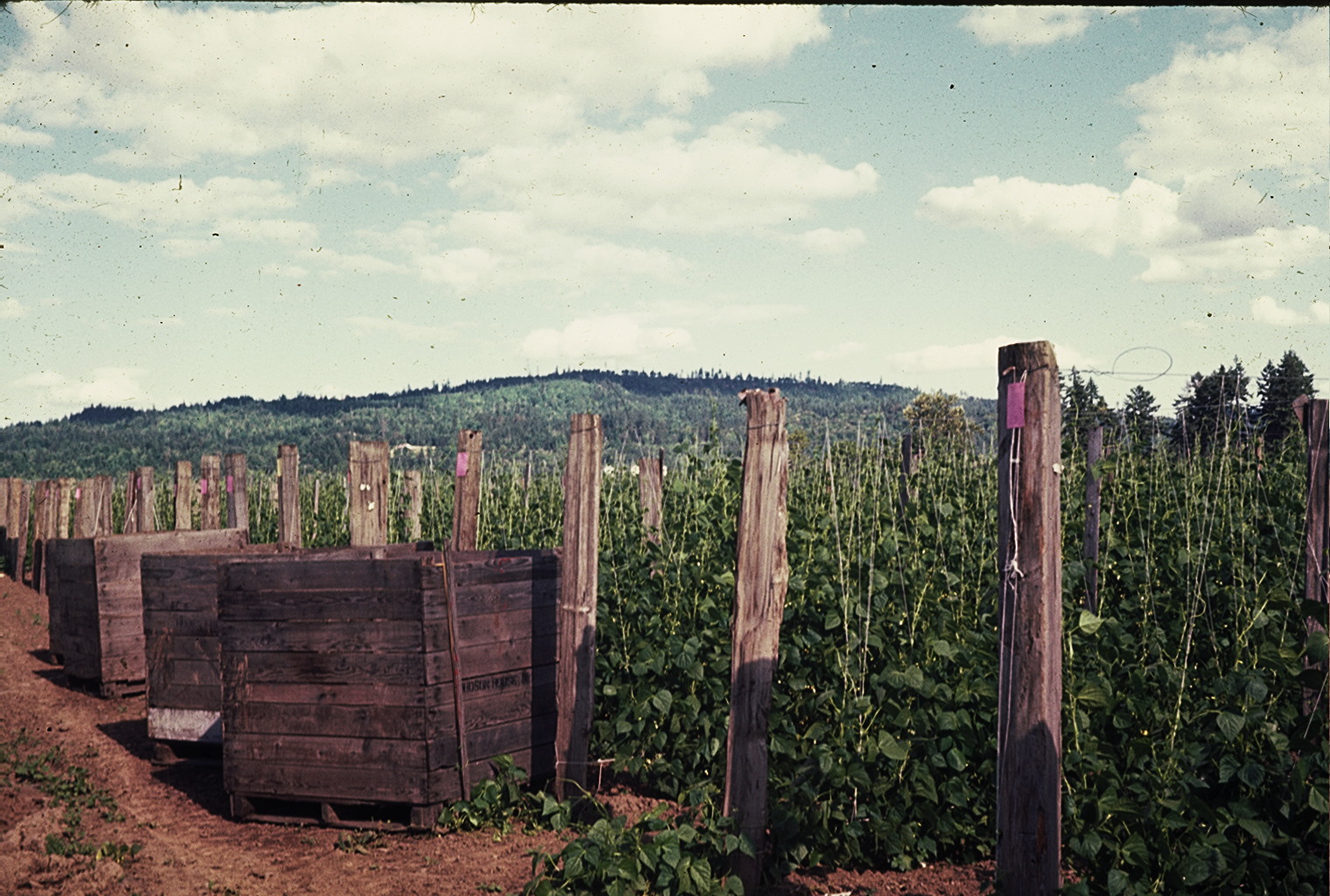
The blue pickup was nowhere in sight. I drove along the dirt road past cherry orchards and fields that were planted with pole beans.
In the camp I saw Grandma Gomez. I sat down on the bench beside her. My heart was still racing with the fear that I might have spoiled my opportunity to teach at Harvest Valley Farm.
“You went to the bodega,” said Grandma.
“Yes, but I’ll never do it again. I still don’t know whether the contratista was being nice to me or whether he was trying to cause trouble.”
“Who knows?” said Grandma.
“Will the patrón take back his permission for English classes?”
“No. He wants his workers to learn English.”
“Then I will come to teach during the bean season.”
“Will your sister come, too?”
“Yes, all winter she has been learning to speak Spanish so that she will be able to talk with you.”
“Very nice,” said Grandma. “I couldn’t say her English name so now I will call her Juanita.”
* * *
Copyright 2012, Rolf Erickson